Polaris: how I run AI builds
A written process for software built by AI agents. Nothing ships until I approve it.
Not a running platform; the process is the product.
Problem
Code written by AI agents needs a limit on what it may change, a second check, and a record of who approved it. I built Polaris to give every piece of AI-built work all three.
What I built
Polaris is a written process for software built by AI agents. Each piece of work gets a plan that lists the exact files the agent may change, an independent review of that plan, the build, verification, my approval, and a closeout record. I use more than one AI model, so one can check the other’s work.
I simplified it after using it. The full process cost more than it saved on small changes that were easy to undo, so review now scales with risk: low-risk work gets a short plan and an optional review, and review is advice, not a gate.
It still depends on my judgment. The tooling checks the code and the structure of the evidence, but it cannot prove the evidence is true or that every decision was followed; I decide what counts as risky, and I enforce the rules.
Built with: Vite, React, TypeScript and Supabase for the workspace and Mission Control, its read-only status view.
Numbers
16 workstreams went through it, some shipped and some abandoned. The independent review earned its place: in the workstream in the full record, it caught three packaging and verification gaps before the build started. The mandatory paperwork did not: on small changes that were easy to undo, it cost more than it prevented. No time saving has been measured.
- 16 workstreams went through it An archive count that includes shipped and abandoned work, not delivered features
Screenshots
-
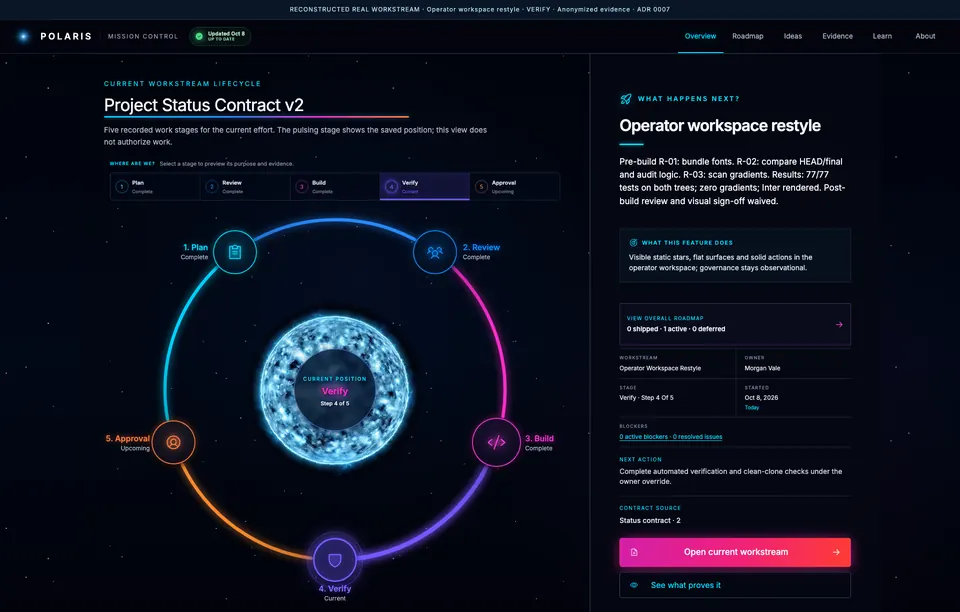
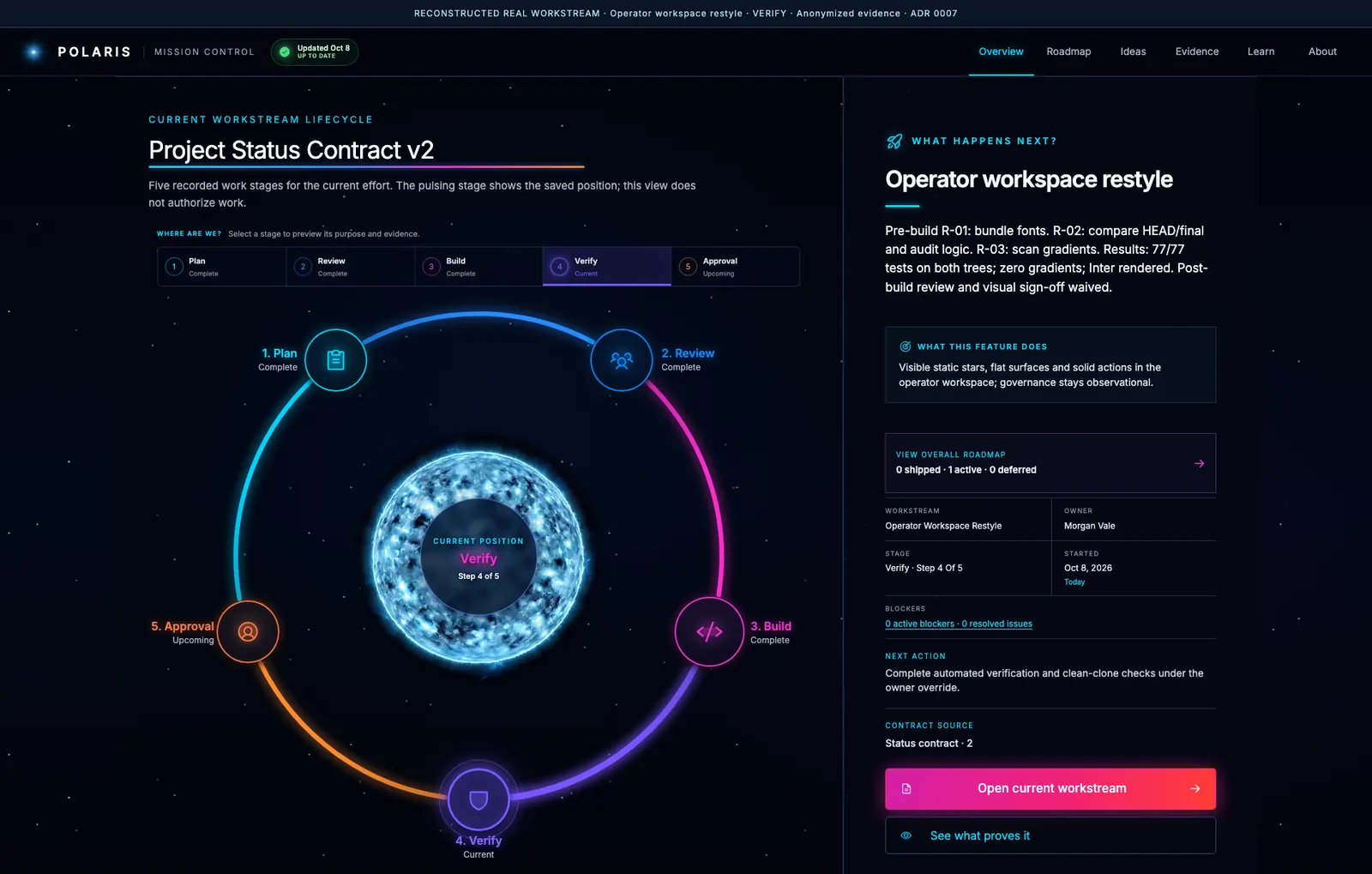
Mission Control at the Verify stage of one real workstream. Anonymized reconstruction with synthetic names; not live status. -
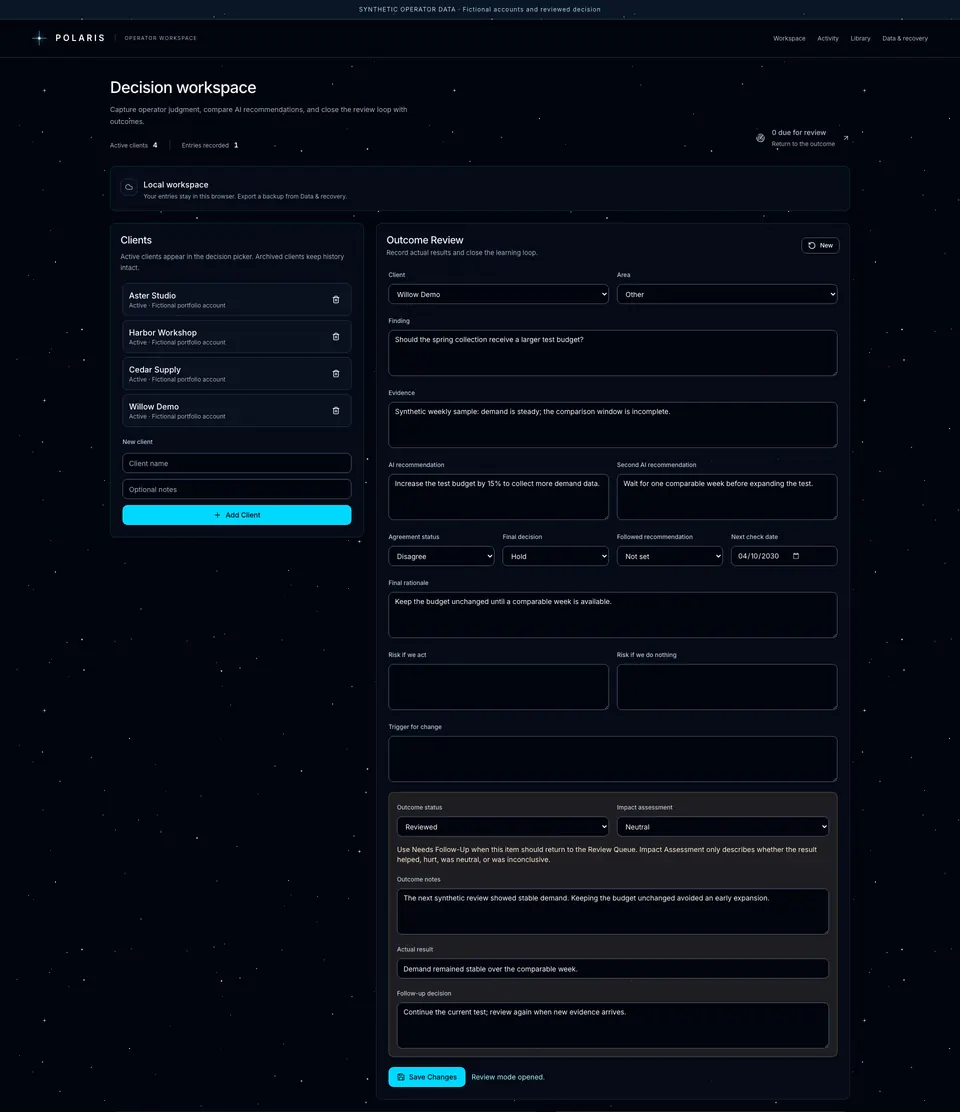
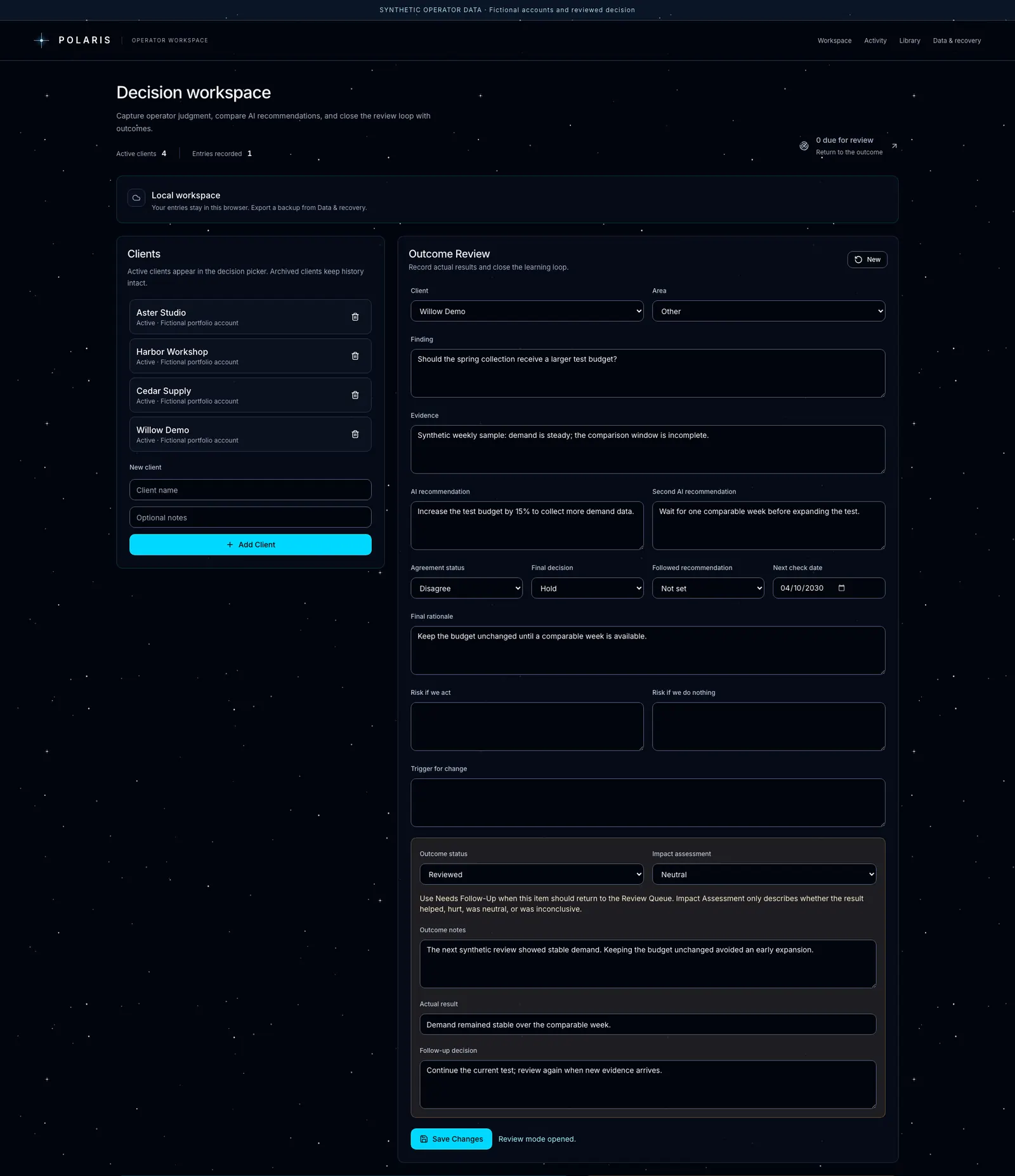
The Polaris workspace. Synthetic data: fictional accounts and a sample decision.
Try it
One real workstream, stage by stage: the plan, the review, the build, the checks, my decisions and the closeout.
In that change I waived the post-build review and my screenshot sign-off, and it was not deployed; the record says so.